Love after loss can hold more than one truth
Dating After Widowhood Over 50
How to make room for someone new without erasing the person, memories, and life that came before.
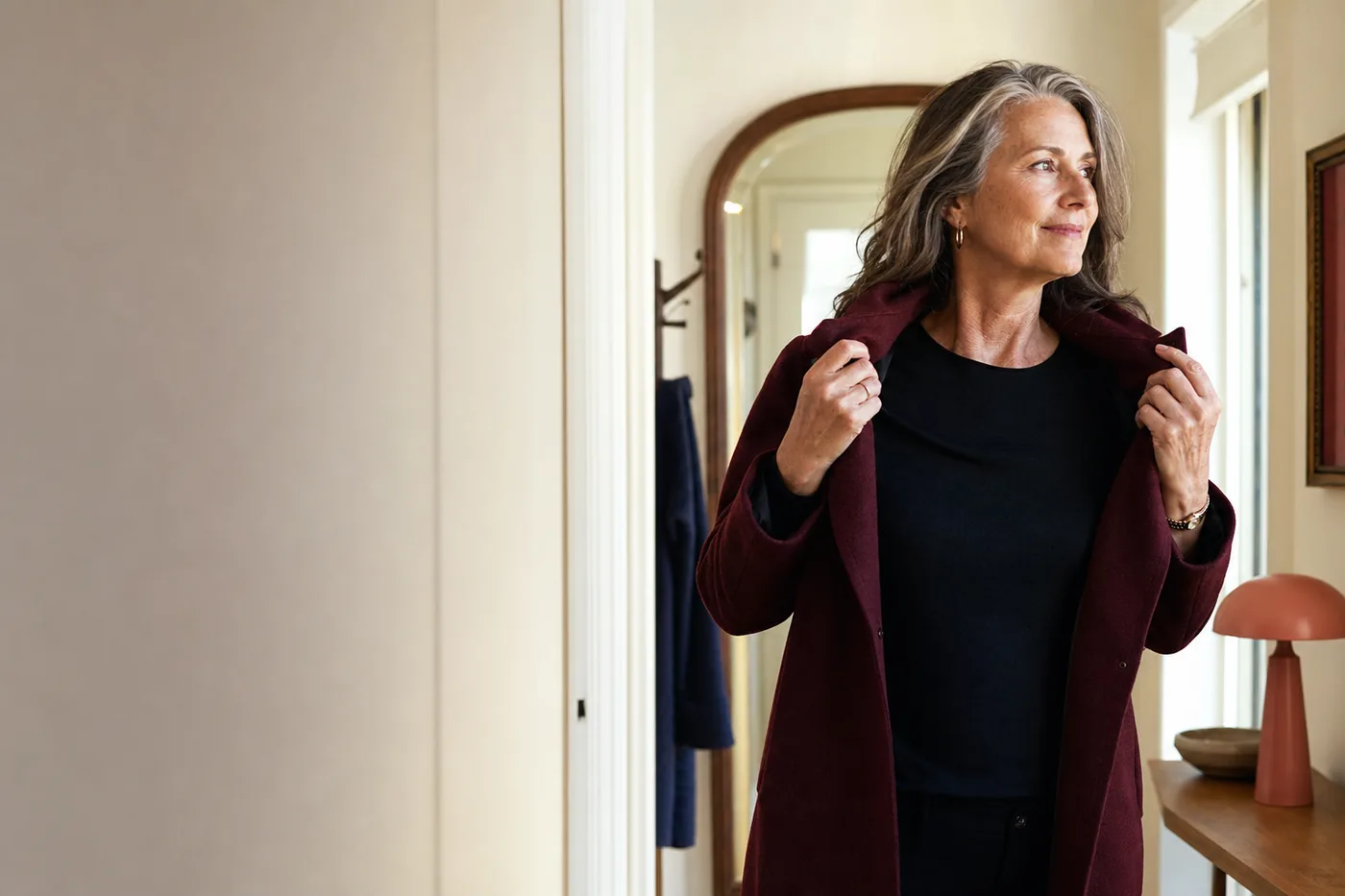
Dating after widowhood over 50 does not require you to stop loving or remembering your spouse. It asks whether you have enough space to become curious about a new person without making them a replacement, a rescuer, or a competitor with the past.
There is no correct timetable. The circumstances of the death, the length and nature of the relationship, caregiving, family responsibilities, loneliness, health, and your support system all shape what readiness looks like. Someone else’s calendar cannot measure your loyalty or your future.
You may feel hope and grief on the same day. You may enjoy a date and cry afterward. Those mixed emotions are not automatically proof that dating is wrong. The useful question is whether you can communicate honestly, move at a manageable pace, and keep support outside the new relationship.
01 / READINESS
How do you know when you are ready to date after losing a spouse?
Readiness is not the end of grief. It is the ability to let a new person be themselves while you remain responsible for your memories, needs, and boundaries. Nervousness is expected; emotional perfection is not required.
Five signs you may be ready
- You are interested in knowing a new person, not finding a replacement for your spouse.
- You can mention your spouse without every conversation becoming a comparison or a grief crisis.
- You can tolerate an ordinary bad date without deciding that dating—or your future—is over.
- You can protect your pace, privacy, money, home, and physical boundaries when attention feels comforting.
- You have at least one source of support outside dating for difficult days, anniversaries, and family reactions.
Choose a smaller step if dating feels too large
You can widen your life before you open it to romance. Have coffee with a friend, return to a familiar group, attend one event alone, take a current photograph, or write down what companionship would mean now. These actions rebuild social confidence without making every encounter carry romantic pressure.
02 / GUILT & LOYALTY
A new relationship does not rewrite your marriage.
Guilt often appears as a question: “If I enjoy this, did my spouse mean less?” That question treats love as if one relationship must delete another. Your marriage remains part of your history. A new person would be joining the life shaped by that history, not erasing it.
“I still love and miss the person who died.”
“I can also want affection, conversation, intimacy, and a future.”
A widowed reader once wrote to me that her first good date felt like shoplifting. She kept waiting for someone to stop her at the door, and nobody did. The guilt faded more slowly than the happiness arrived, she said.
Notice where the guilt is coming from
- Your own belief about how a widow or widower is supposed to behave.
- Fear that children, friends, or in-laws will think you are replacing your spouse.
- A promise, spoken or imagined, that moving forward would mean forgetting.
- The contrast between enjoying a date and remembering that your spouse cannot have the same future.
Name the source before obeying the feeling. Guilt can carry important information, but it can also be a reaction to change rather than evidence that you have done something wrong.
03 / WHAT FITS NOW
Decide what kind of connection belongs in this chapter.
You do not need to recreate marriage. You may want occasional companionship, a committed relationship with separate homes, shared travel, cohabitation, or eventual remarriage. Consider how a relationship would fit your energy, family, home, finances, health, caregiving, faith, and desire for independence.
Companionship
Regular conversation, affection, outings, and support without combining households.
Committed but living apart
A serious relationship that protects both people’s homes, routines, and family space.
A shared future
Cohabitation or remarriage approached slowly, with clear conversations about property, benefits, caregiving, inheritance, and family expectations.
“You are not choosing between the past and the future. You are deciding how both can be held honestly.”
04 / WHAT TO SAY
How to talk about widowhood on a profile and a first date.
State your relationship status accurately, then let most of your introduction describe your present life. A profile is not the place for the full story of illness, death, caregiving, or grief. That information deserves trust and a real conversation.
“Widowed, grateful for the life I shared, and ready to meet someone for companionship and a meaningful next chapter.”
“My spouse died several years ago. That relationship remains part of my life, but I am here because I am genuinely open to knowing someone new.”
“I am glad to share more once we know each other better. I would rather our first meeting not center on the hardest chapter of my life.”
“That memory came up strongly today. It is not a judgment about you, and I do not want you to feel you are competing with my past.”
What a potential partner needs to understand
- Your late spouse may remain present through memories, photographs, family relationships, possessions, rituals, or anniversaries.
- Remembering is not automatically comparison, but repeated comparison can make a new partner feel invisible.
- A new person is allowed to ask respectful questions and have boundaries of their own.
- Both people should be able to say when a topic feels too intense for the stage of the relationship.
05 / FAMILY
Tell adult children and close family without asking permission to live.
Children and in-laws may experience your dating as another change to the family they are trying to preserve. Their feelings can be real without becoming a decision about your private life. Share calmly, allow time, and avoid surprising them with an introduction at an important family event.
“I want you to hear this from me. I have started meeting people slowly. No one is replacing your parent, and our memories and family relationships are not being removed.”
“This person has become important to me. I would like you to meet in a relaxed setting, without expecting anyone to feel close immediately.”
- Do not ask children to keep dating secret from relatives or manage other people’s reactions.
- Do not introduce every early date. Wait until the relationship shows consistency.
- Keep the first meeting short and neutral rather than attaching it to a birthday, memorial, or holiday.
- Reassure family with actions: maintain important traditions and relationships where they remain healthy.
- Listen carefully if someone describes specific disrespect, pressure, isolation, or financial behavior.
06 / GRIEF WAVES
Plan for grief to return without making the relationship carry it alone.
Anniversaries, holidays, songs, places, health scares, family news, or physical intimacy can bring grief back suddenly. This does not always mean you chose the wrong person or started too soon. It may mean a meaningful memory has been activated.

Create a plan for difficult dates
- Tell a new partner in advance that a particular day may be emotional.
- Decide whether you want company, privacy, a ritual, or contact with family.
- Avoid testing love by expecting someone to guess what you need.
- Keep counseling, friendships, or bereavement support available when possible.
- Return to the conversation afterward so neither person has to invent an explanation.
07 / A GENTLE START
Six low-pressure steps for dating again after loss.
- 01
Reconnect with ordinary life
Choose one recurring activity, meal, walk, class, or gathering that gives your week structure even if romance never develops there.
- 02
Decide what dating means now
Name whether you want conversation, companionship, an exclusive relationship, shared travel, living apart together, or possible remarriage.
- 03
Prepare a present-tense introduction
Use current photographs and describe what your life includes now. Mention widowhood accurately without turning the profile into a memorial or medical history.
- 04
Try one manageable conversation
Begin with one person or one channel. One relaxed phone call often tells you whether meeting in person would feel comfortable.
- 05
Plan a simple public date
Meet for coffee, lunch, a gallery, or a short walk. Arrange your own transportation and give yourself permission to leave on time.
- 06
Review gently
Ask whether you felt respected, curious, safe, and able to be yourself. You only need to decide whether you want another conversation.
08 / TRUST & SAFETY
Why scammers target the widowed—and how the “shared loss” script works.
Romance scammers deliberately target widowed people, and not only because loneliness makes warmth welcome. Widowhood is often publicly visible: an obituary that names the surviving spouse, a memorial page, a grief support group on social media, or the word “widowed” on a dating profile. Each of these tells a stranger exactly which story will land.
The most effective script is borrowed grief. “I lost my wife three years ago—I know exactly how you feel” creates instant, unearned intimacy: you feel understood by someone who has apparently stood where you stand, and ordinary caution starts to feel like ingratitude. The claimed loss is usually invented, assembled from details you shared first.
- 01Mirrored grief that arrives too fast
They claim a nearly identical loss early in the conversation, echo your own words back to you, and steer every exchange toward emotional depth before you have verified anything ordinary about them.
- 02“Only you understand me” isolation
They frame the connection as uniquely healing, something friends, family, and grief groups could never understand. Then they ask to move to private messaging so you can “talk more openly.” Special understanding is the hook; isolation is the goal.
- 03Anniversary and memorial awareness used as leverage
They remember the dates you mentioned and appear with intense support exactly when you are most vulnerable. Then a crisis of their own follows, with a financial solution only you can provide.
- 04Grief that never gets specific
Ask ordinary questions about their late spouse: how they met, what they miss on ordinary days. Invented grief tends to be cinematic but vague, and the details shift when you return to them later.
None of this means a genuinely widowed match is suspect: shared loss can be a real foundation. The difference is pace and pressure: a real person lets trust grow through calls, public meetings, and consistent behavior, and never needs your money. The full checklist for privacy, first meetings, and money rules is in our complete safety guide.
Review the complete dating safety guide →09 / COMMON QUESTIONS
Dating after the death of a spouse: FAQ
How long should a widow or widower wait before dating?
There is no universal timetable. Readiness depends more on your ability to stay curious about a new person, maintain boundaries, and manage grief without making a date responsible for carrying it than on a particular number of months or years.
Is dating after the death of a spouse a betrayal?
No. A new connection does not erase your spouse, your marriage, or your grief. Love for someone who died and openness to someone living can exist at the same time.
Should I say that I am widowed on my dating profile?
If a profile asks for relationship status, answer accurately. In the written section, one calm sentence is usually enough. Focus most of the profile on your current life, interests, values, and the connection you hope to build.
When should I tell adult children that I am dating?
Tell them when dating becomes a meaningful part of your life, while keeping casual early meetings private. Listen to their grief and concerns, but do not ask them to approve every date or use them as messengers to extended family.
How do I stop comparing a new partner with my late spouse?
Notice the comparison without treating it as a verdict. Ask what the new person values, how they communicate, and how you feel around them. A different style of love is not automatically a lesser one.
What if grief returns while I am dating?
Grief can return around anniversaries, places, music, family events, or unexpected moments. Explain what is happening, use support outside the relationship, and slow the pace if needed. A difficult day does not necessarily mean you are not ready to date.
Why do romance scammers target widows and widowers?
Widowhood is often publicly visible through obituaries, memorial pages, and profile status, which tells scammers which emotional script will work. The most common approach is claiming a similar loss to create instant intimacy. Be cautious when mirrored grief arrives fast, the connection is framed as something only the two of you understand, and a financial crisis eventually follows.
ONE HONEST NEXT STEP
You can remember deeply and still become curious again.
Begin with the smallest step that feels alive rather than forced: a conversation, a current photograph, a social activity, or a short public meeting.